Just Got Engaged? Here's What To Do Next
You said yes. Or they said yes. Or you both said yes at the same time and now you're both crying in a restaurant and people are starting to clap.
However it happened. Many congratulations.
Now comes the bit where everyone in your life suddenly has a very strong opinion about what you should be doing next. Book the venue. Set the date. Pick a theme. Have you thought about catering? What about a band?
Here's my advice: breathe.
Take a momoment. Enjoy it. Soak it all in.
Tell the people who matter...before you post it
Before you post anything, call your parents. Call your best friend. Call whoever is on that short list of people who'd be genuinely hurt to find out via an Instagram caption.
It sounds obvious, but in the excitement of the moment it's easy to default to your phone. Those people will want to hear your voice when you tell them.
Once the calls are done, post whatever you like.
A few practical things for the announcement if you're thinking about photos:
- If ring shots matter to you, give yourself a couple of days. A quick manicure, some decent light, not the back of a taxi at 11pm. It's worth the small wait.
- You don't need engagement photos for the announcement. But if you're thinking about them at some point, don't rush. An engagement shoot is best done when you've settled into being engaged, not while the adrenaline's still running. More on that below.
One boring but important thing: ring insurance. Sort it within the first few weeks. If the ring gets lost or damaged, you'll want that already in place.
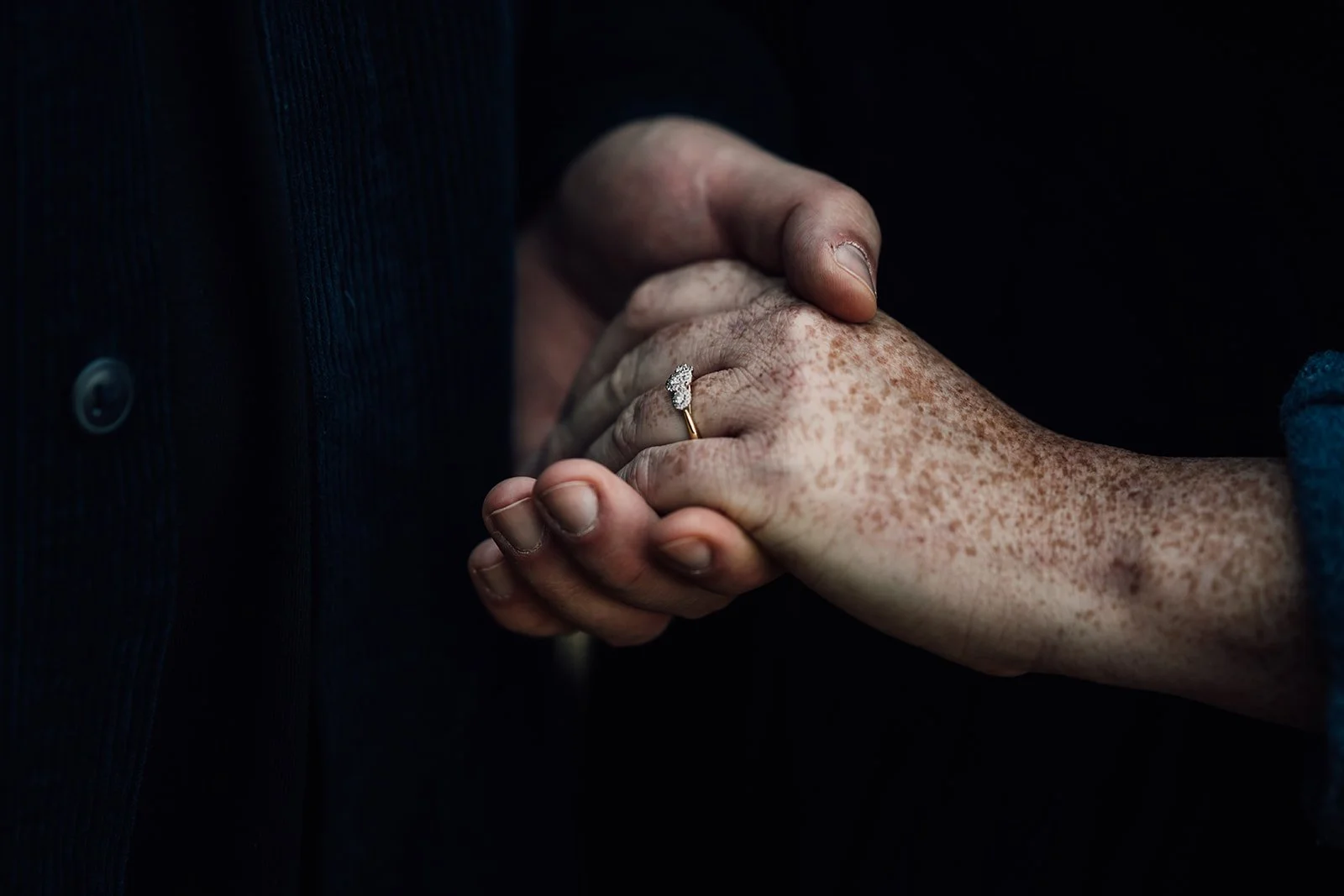
Give yourself a moment to actually enjoy it
Here is the thing nobody tells you: you don't have to start planning immediately.
Venues and photographers and florists aren't going anywhere in the next two weeks. The feeling of being newly engaged, though? That does pass. Quickly.
So before you open a spreadsheet or look at a single wedding blog (beyond this one!), go out for dinner. Have people round. Sit with it.
Most weddings are 12 to 18 months out. A week or two of just being engaged doesn't cost you anything, and it gives you the mental space to start planning from a good place, rather than a panicked one.
Enjoy it first. Then plan.
Have the big conversation before you start making decisions
Before you book anything, have one conversation with your partner. Not about venues or budgets yet. About what kind of day you actually want.
This one's easy to skip. You start browsing venues, you fall in love with something, and then you're three months in trying to reconcile two different visions of the same day.
Guest list size is the single decision that drives almost everything else. A 120-person wedding is a fundamentally different day to a 40-person one...different venues, different budgets, different feel. Agree on a rough number before you start looking. It makes the search a lot simpler.
Budget comes next. Set a realistic number before you look at anything. I've spoken to couples who spent weeks falling in love with venues they couldn't afford, and then felt deflated about everything else as a result. Know your number first, then look.
Priorities are the big one. Every couple has three or four things that genuinely matter to them, and a long list of things that feel like they should matter but actually don't. Figure out which is which early. If food and atmosphere are everything, spend on those. If you don't care about flowers, say so! It saves someone an awkward conversation later.
The underlying question is: how do you want the day to feel? Not what it looks like on a mood board. How you want to feel when you're actually in the room.
That conversation is worth more than any spreadsheet.
Book your venue and photographer early...and in that order
Once you've had the big conversation, two bookings should happen before anything else: your venue, then your photographer.
Venue first. The date doesn't exist until the venue does. Once you've locked in a venue and a date, everything else slots into place. The caterers, band, guests, timelines. Without it, you're just moving things around.
Most good venues are 12 to 18 months out for popular Saturdays in peak season, sometimes more. If you've got a specific place in mind, don't assume it'll be available when you get around to looking.
Photographer second. This one surprises most couples. The assumption is that you have more time than you do, and then six months before the wedding, the photographers you like are already booked.
Good photographers fill up fast, for a simple reason: shooting a wedding properly takes real time and energy, and that naturally limits how many any one person can do well in a year. Once they're gone, they're gone.
When you're choosing, the work matters, but perhaps more importantly, so does the person. Your photographer will be with you for most of the day, from getting ready through to the first dance. They're in your getting-ready room. They're standing close to you during the ceremony. If they're awkward, you'll feel it. If they're calm and easy to be around, you'll relax, your guests will too, and the whole day flows better.
Look at full wedding galleries rather than just portfolio highlights. The highlights are always the best shots. What you actually want to know is what a whole day looks like.
Think about what kind of approach you want. Do you want someone directing you through a long list of posed combinations? Or someone who keeps things moving, does short portraits, and spends the rest of the day covering your guests and the moments you'll want to see later?
If you're after something relaxed and people-focused, I'd love to hear from you. I take a limited number of weddings each year. If your date is coming up, it's worth checking availability sooner rather than later.
Keep planning organised but don't let it take over your life
Once the venue and photographer are sorted, you've got time. Use it.
The main thing: pick one system and stick to it. One folder. One spreadsheet. One planning app. Not three half-finished docs and a notes app nobody's touched since March.
A few things that tend to help:
Divide it up. You don't both need to be across every decision. One person handles venue logistics, the other handles suppliers. Split based on who cares most about what, not on some idea of equal effort.
Use Pinterest and Instagram with intention. Both are useful for getting a feel for what you like. Neither is useful if you've saved 600 photos of table settings that all look completely different. Keep the ones that actually feel like you, delete the rest.
Protect your relationship. Planning a wedding is a legitimate project and it will take real time and energy. Build in evenings where you don't talk about it. The planning will still be there tomorrow.
And one more thing: trust yourself. You know more about what you actually want than any wedding blog does. The goal isn't to plan the day that photographs best. It's to plan a day that feels genuinely like you.
You've got this
I know it sounds like a lot. In some ways it is. Planning a wedding is a proper project and it takes real effort to do it well.
But most couples I've worked with say the same thing afterwards: they wished they'd worried less and enjoyed the process more. Because a wedding isn't just the day itself, it's the whole thing. The planning, the decisions, the conversations with your family and friends along the way.
Start with the big conversation. Book the venue. Book the photographer. Then take it one thing at a time.
And if you're looking for a photographer who'll keep things relaxed and help you actually enjoy your day, I'd love to have a chat. Get in touch, check your date, and we'll have a no-pressure conversation about what you're planning.
Congratulations again.
Elis Wilkins is a documentary wedding photographer based in Wimbledon, shooting across the UK and beyond. He takes a limited number of weddings each year.
Double-click to edit...
